«Come gather ‘round, people, wherever you roam
And admit that the waters around you have grown
And accept it that soon you’ll be drenched to the bone
If your time to you is worth saving
And you better start swimmin’ or you’ll sink like a stone
For the times, they are a-changin’»
Times are changing
Here’s what we’ll cover today:
1. AI
Companies need (much) fewer people for the same output/results
Many new companies start, as problems that were hard to solve in the past are now crackable
The way tech professionals work is changing majorly and very quickly
If you’re an “AI skeptic” tech worker, you’re professionally dead.
If you think “AI is not good enough / only produces slop / is a bubble” you’re not gonna make it.
AI is extremely powerful and of “seismic impact” when it comes to how people work and produce value in the tech/software industry.
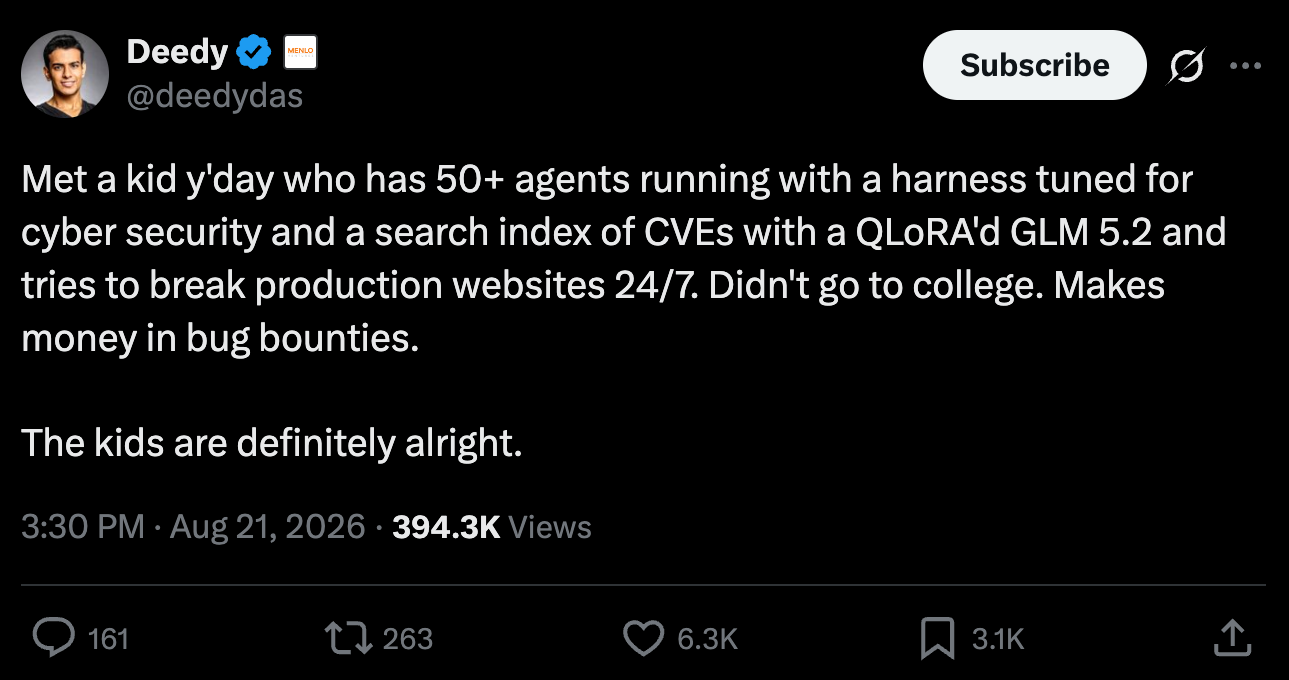
Many companies are quickly adapting to these changes.
New startups are “AI-native” and start with new ways of work from scratch.
Companies that won’t adapt will likely shrink or die.
In the majority of profitable and high-growth companies developers are already not writing code by hand since at least one or two years.
It’s still early days, so companies and teams are still figuring out the new ways to work: you might have already heard about agents orchestration, workflows, loops, systems that automatically react to events and act (fix bugs, analyse outages, monitor production systems, do customer support, etc).
Interviews are probably next.
The window to enter big tech by just focusing on Algorithms and Data Structures and System Design is likely closing.
IMO it’s not unlikely that in one or two years that will not be enough to enter, and a mix of project work or AI-assisted interviews will be introduced.
High-paying startups are already interviewing differently from Big Tech. Which leads us to…
2. From Big Tech to Startups
2015-2025 was the decade of Big Tech:
Get a referral from Blind
LeetCode for 2 months and get interviewed with some medium and easy questions, occasionally a hard if you’re unlucky, get the job
Work 4 to 6 hours a day, make 2x/3x what engineers outside of big tech make, enjoy free food and other perks, no layoffs just growth
As everyone knows, that era is over.
2025-2030 might be the decade of high-paying startups (including remote ones)
Everyone knows that Anthropic and OpenAI now pay roughly 2x what traditional Big Tech pays.
Not many know that there’s a lot of up-and-coming AI startups paying high-six figures for remote workers too
And I’m not talking about the usual $100-200k remote jobs that I’ve mentioned many times in this newsletter.
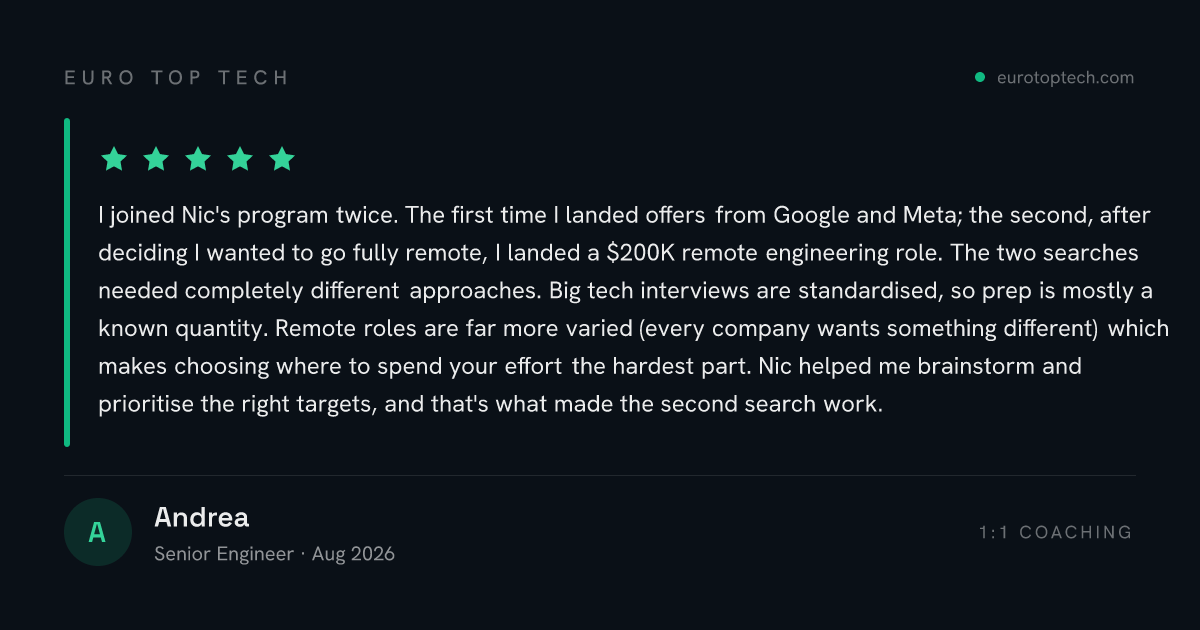
I’m talking about startups paying $200k+ for remote engineers/scientists, like this recent coaching client job offer:
3. Seven figures remote packages
It gets even crazier!
One thing that I was happily surprised, and genuinely a bit shocked, to see, is the new heights that remote compensation has reached in the past 2 years of AI revolution.
This 24 y.o. AI Engineer is making $350k in base salary + 7 figures in yearly stock options, remotely:
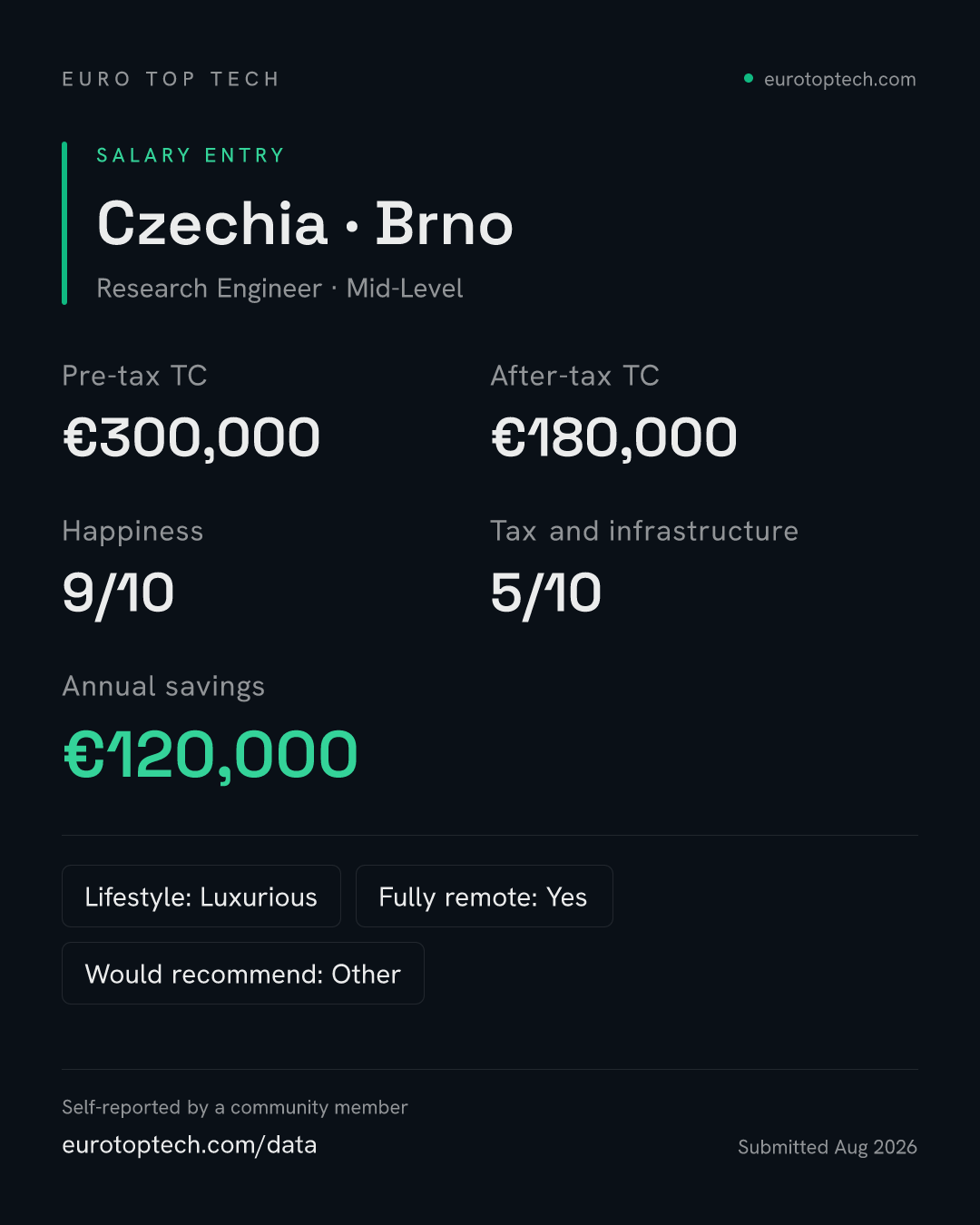
They’re currently in Czechia 🇨🇿, but the job is fully-remote, and they could move anywhere.
Interestingly, they’re moving to the US: <<I’m actually moving to the US. If you want to build cutting edge AI, it’s not possible here. I’d much rather take $6000 rent in San Francisco and a chance to build with enough resources than a penthouse for €2000 here in Central/Eastern Europe. But who knows, maybe someday people won’t have to make that choice>>.
Which is fair enough. Although, personally I still think that there’s a great middle ground of high income opportunities from the US/internet and European lifestyle.
NOTE: The stock grant is not liquid, since the company isn’t publicly traded (yet), but probably will materialise soon. Anyway, even “just €300k base salary” is already nuts, for being fully remote and just 24 😄
This is not an isolated case…
This 23 y.o. is making $300-400k remotely from Kosovo 🇽🇰
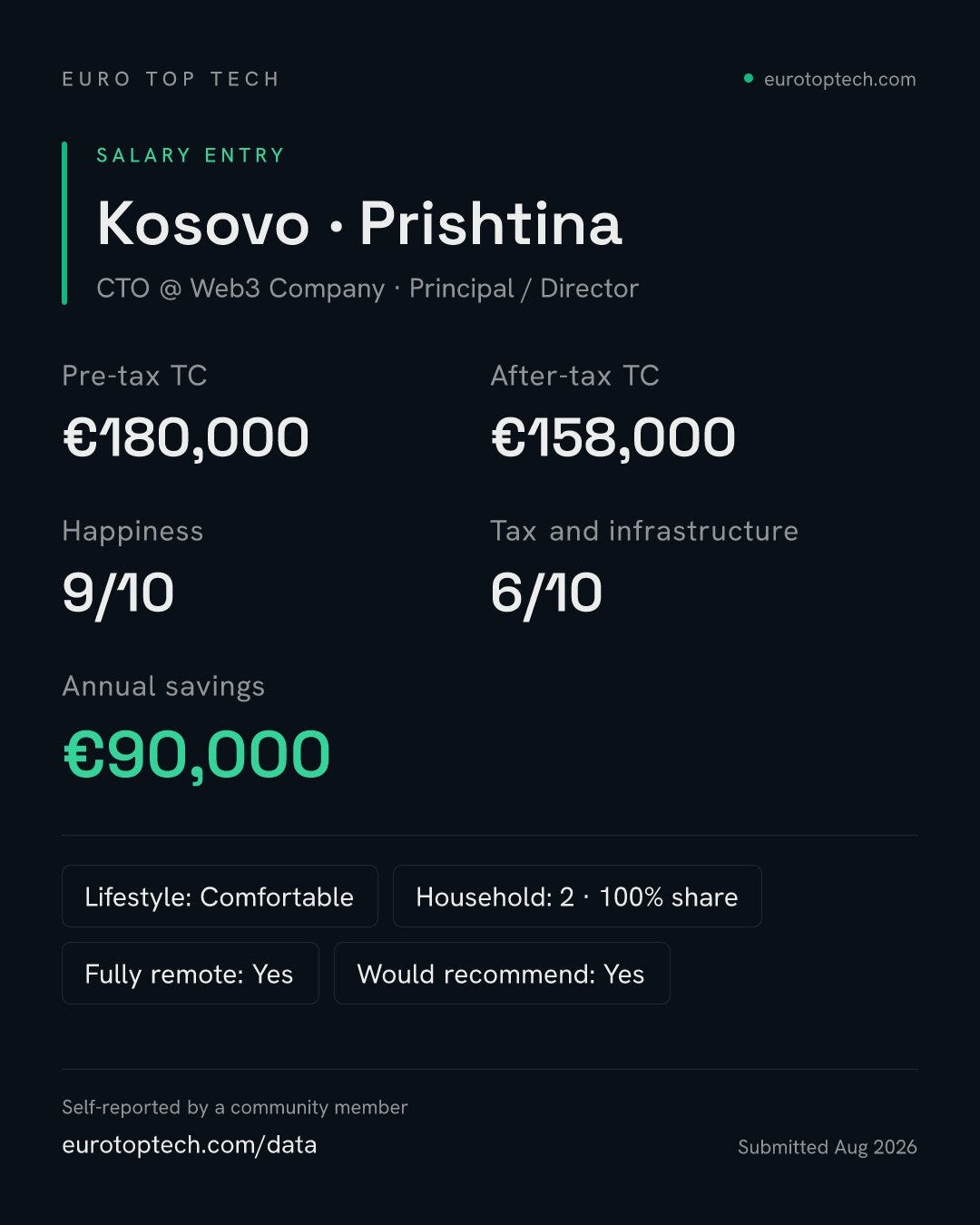
Working as a CTO for a crypto startup
€180k base salary
€100-200k on top in bonuses
<15% tax rate
Talk about geo-arbitrage…
I verified their salaries and packages (they sent me the actual documentation like Deel contracts and so on)
Because to be honest these numbers sounded crazy and unheard of to me too.
But here we are:
It’s 2026
Companies care about making money
A 10x engineer can now make a top company 10x more money than an average engineer
AI has certainly contributed to this:
The increase in productivity and value produced hasn’t grown uniformly across bottom and top of the skill market (top engineers benefitted more, more on this later)
The same logic applies across companies: some companies are just way more profitable per employee unit than others, so they can pay much more (this is the same principle that allowed big tech companies 10/20 years ago to pay much more than the rest of the tech market)
Another case (last one for today): making €155k after taxes in their 20’s from Kosovo
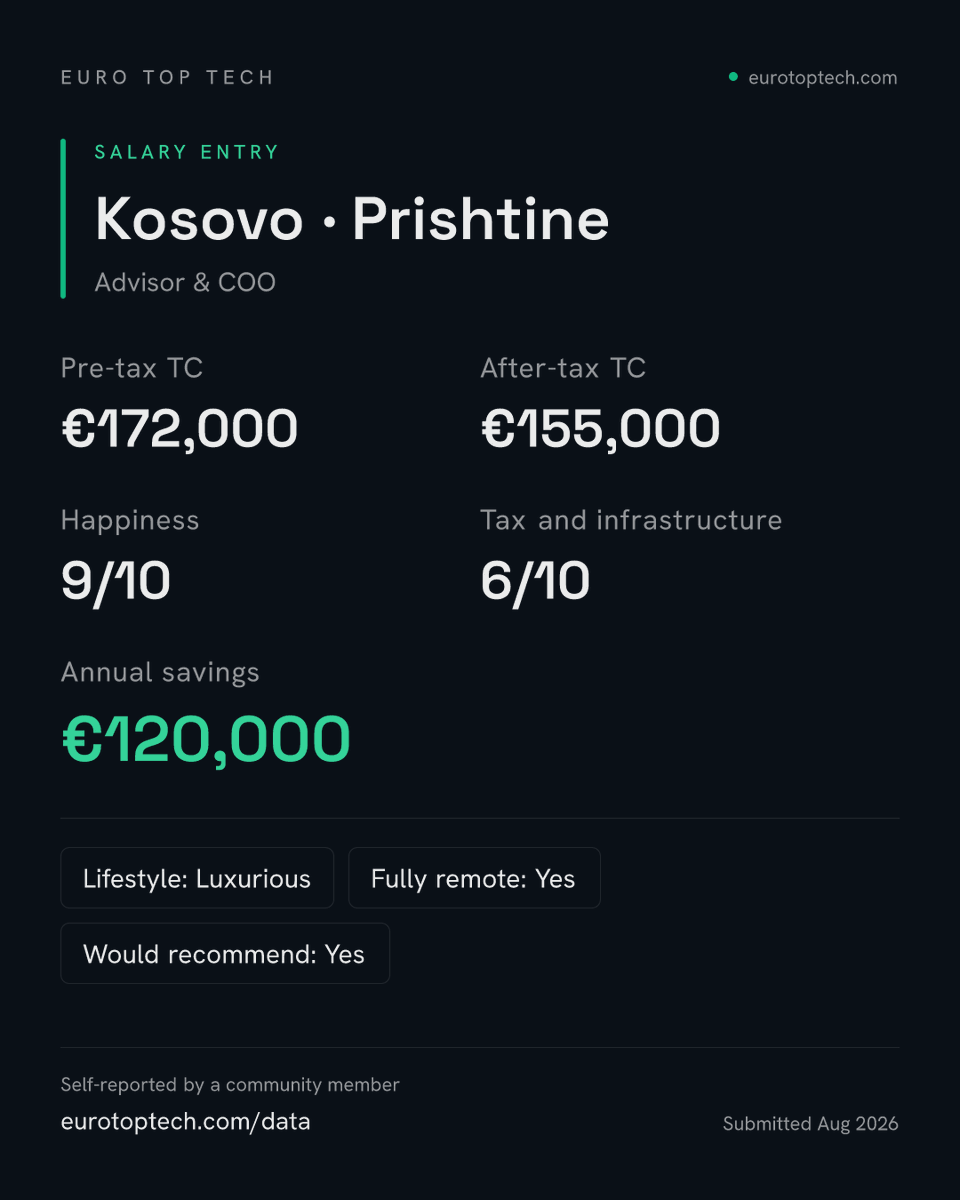
Again: verified salary and documentation.
Here’s what they had to say about their setup and life:
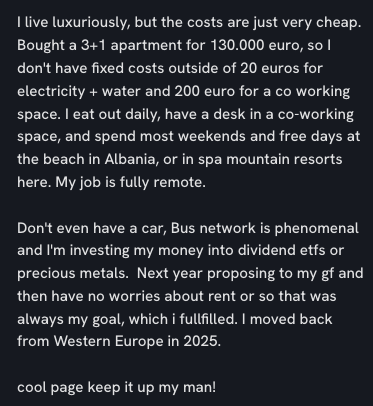
Mid 20s
Paid off house
Making €155k after taxes
Proposing to gf, investing in metals
Beach clubs in Albania, SPA resorts in the mountains
No worry about nothing.
Talk about CEE REMOTE LIFE MAXXING.
Another bonus example: 210k eur remotely from Serbia.
4. “more traditional” opportunities will worsen
And become harder to get and more competitive.
Here’s what I mean:
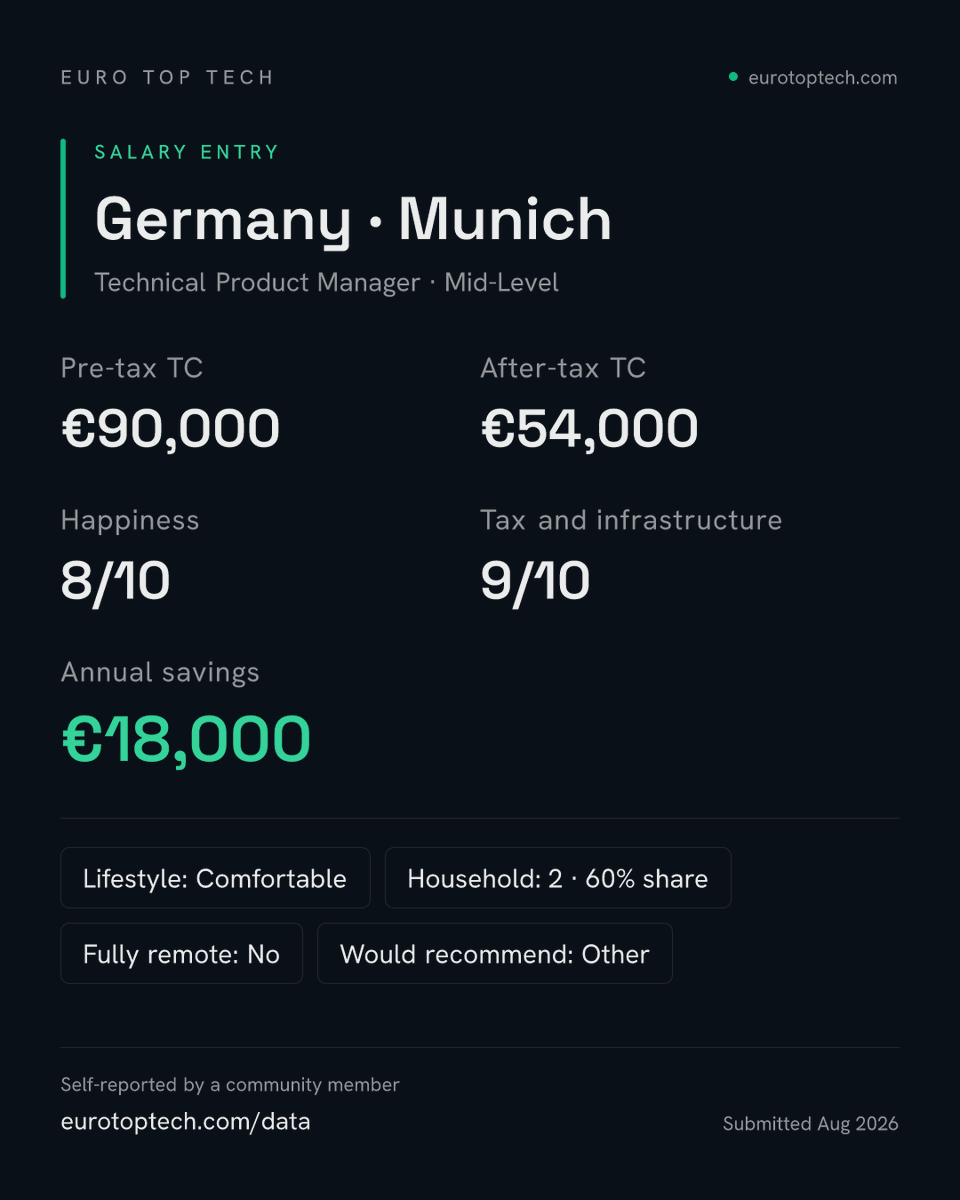
The above situation might look good today, but it’s not going to be pretty 10 years from now.
And this is true everywhere in Europe, it’s not a Germany specific thing.
That’s because European and/or older companies will suffer
Anywhere you’ve been in Europe, especially in the higher-paying half of it, you will for sure have seen it yourself already: “the market is tougher”.
That is, the average or lower-paying half of the market, or even the lower-paying 80-90% of the market.
Companies don’t adapt to AI in order to boost their growth, they simply leverage it to cut costs (=workforce) and stay profitable for a bit longer, until Claude or any of its competitor finishes eating the “older company’s” lunch.
This is why people complain about how hard it’s to find a job, especially well-paid one, in Germany, UK, Switzerland, and so on.
The old script of “well-paid job with good work-life balance" is effectively expired.
Or rather, the extreme version of it: building CRUD apps for a European bank or similar, working slowly, being average IQ, etc.. While getting paid well. That whole deal is getting scraped out of Europe.
Not tomorrow, not even in 2/3 years. But in 5-10 years, most likely yes. And in the meantime, it’ll progressively get harder as years pass (from a few years ago).
5. What you get in exchange for your taxes will deteriorate
People today might be happy with deals such as this:
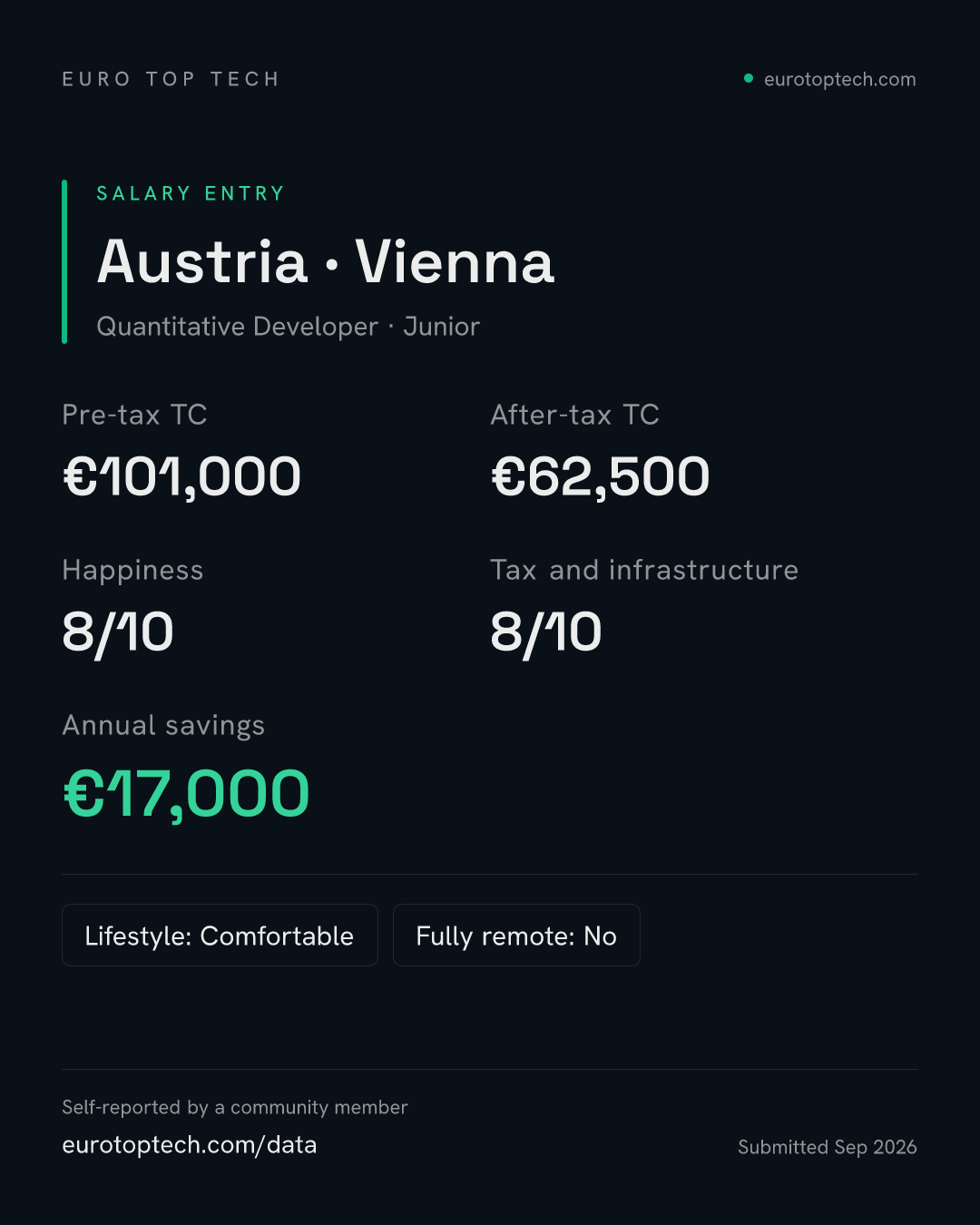
Many seem to find 50% tax rates “worth it”:
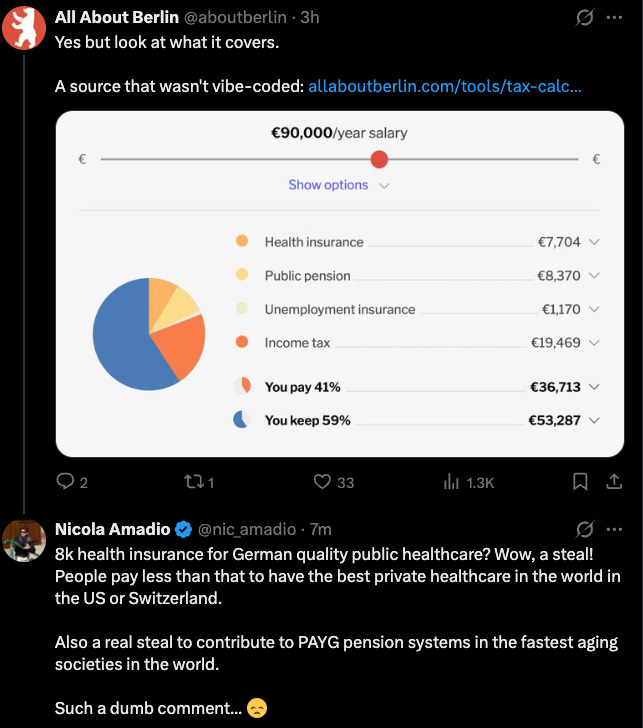
But it’s not only an objectively bad deal today, it’s also set to become worse.
I made a few posts here about Italy’s pension system “scam trajectory”, and similar mechanism apply to most of EU.
The Tl;Dr version:
Aging society means that you’ll keep paying 20-30% in social security for a pension that you won’t really see
Aging society also means that there’s gonna be few people paying contributions but A LOT of people consuming services, welfare and pensions
Aging society paired with low growth (<2% in most of Europe) means that a lot of the income taxes will have to pivot to pensions (already happens), which leaves less budget for infrastructure and public services.
The above point means that public service quality will deteriore, while the high taxation will stay. So, in summary: you’ll pay 50% taxes for little to no pensions and low-to-mid quality public services
Italy is a great example here because it’s already in the “it’s too late” territory.
And it shows, in the satisfaction and happiness of tech workers (compared to Poland for example):
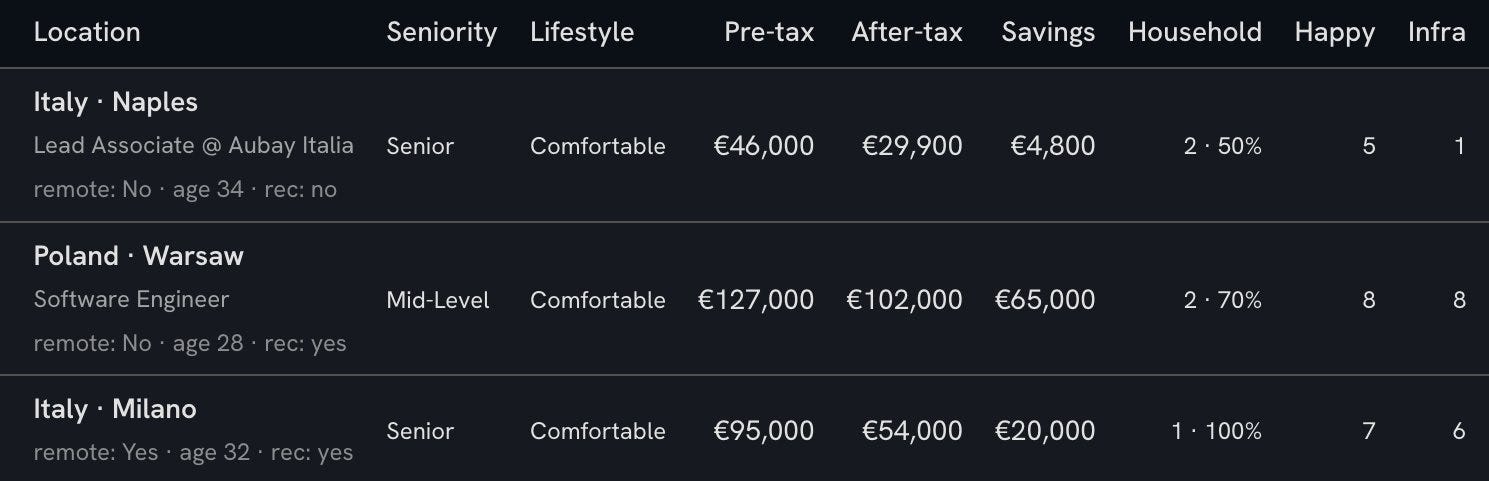
A couple of ways to address this issue:
Get a remote job and move to a low-tax place and buy a nice life through private services
Go to a mid/high tax place with good balance sheets and migration control, to protect you from too much “inshittification”
6. How to save yourself
Or, in other words, how to thrive in the “Brazilification” of (most of) Europe:

Which, in short, is about:
Working hard
Wisely choosing where to be located
Becoming 10x more productive thanks to AI
Having a solid career strategy that adapts to the new market and is well-planned
This article is brought to you by:
Euro Top Tech — the platform for top-paying tech careers in Europe
15,000+ high-paying European tech jobs from big tech, HFT firms and well-funded scale-ups, plus 3,000+ fully remote six-figure roles. Save your CV once and both boards rank jobs by fit to it, flag relocation support, and warn you when a posting offers no visa sponsorship.
AI Career Lab: a six-stage path to your next role. It scores your target roles, reviews your CV, shows your exact skills gaps, and preps you for interviews, with a weekly email that keeps you moving.
Ask the coach: an AI coach built from my 1:1 coaching, inside Career Lab. It reads your saved CV and your plan, and answers the way I would, at any hour.
Application tracker + outreach tools: track your target roles, add jobs from any job board by pasting the link, follow your pipeline by company, and get your LinkedIn messages reviewed before you send them.
Live pay data: net salary, tax, yearly savings and livability by country and city, built from 1,500+ real engineer reports.
Private guides plus a members’ Discord for connection, feedback and networking.
Remote GOATs bundle for tech workers focusing on worldwide remote roles.
Six Figure Euro Engineer — work 1:1 with me
Coaching with me, Nicola Amadio (who writes this newsletter). Join the engineers who have 2 to 3x’d their pay and freedom over the past few months.